Artistic Philosophy and Practice
At the core of Megha’s practice is the belief that movement, image, and narrative are inseparable. Through performance, film, and installation, she examines how bodies carry culture, memory, and emotion. Retelling traditional narratives, placing classical stories in dialogue with contemporary experience and the intersection of Eastern and Western philosophical thought, forms the foundation of her work. Her recent research involves examining classical principles from texts like the Nāṭyaśāstra.
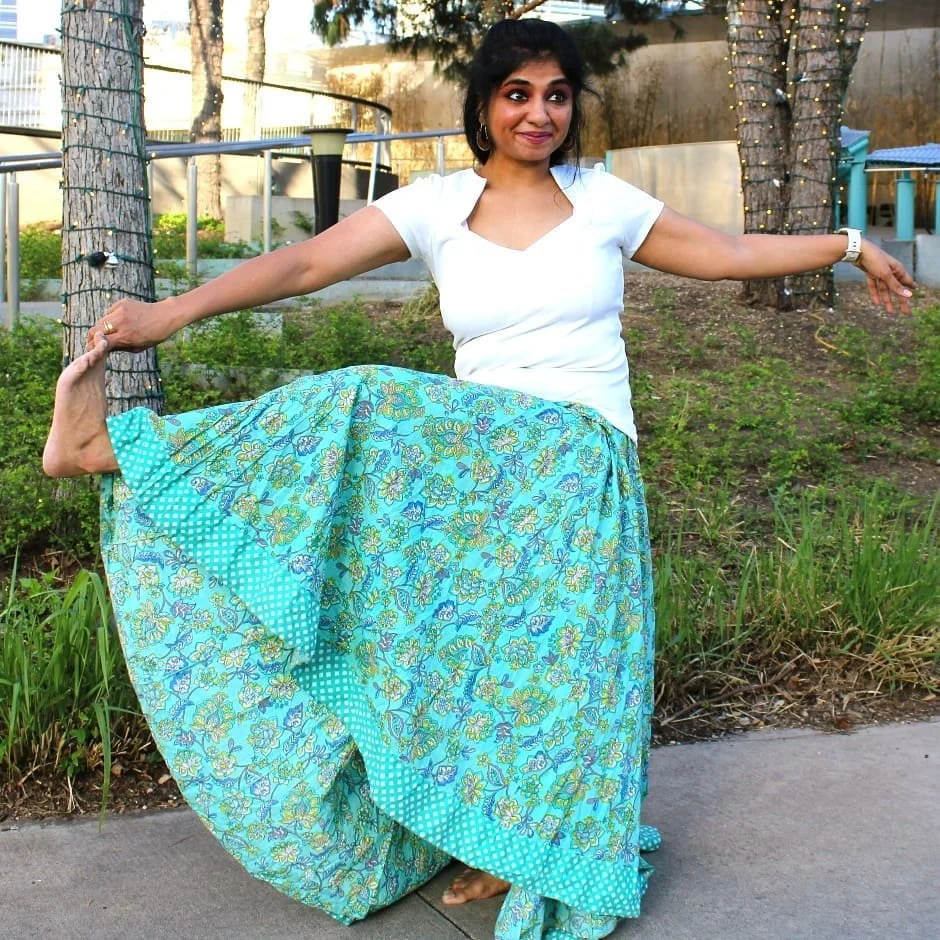
Megha’s artistic practice is informed by embodied disciplines including Yoga, Reiki, and Vipassana. These practices shape her approach to movement, stillness, breath, and presence, influencing both her creative process and pedagogical methods.
Rather than functioning as therapeutic modalities, Yoga and Reiki serve as somatic research tools, supporting her exploration of awareness, attention, and the body as a site of memory and narrative. This integration allows her work to engage with healing, introspection, and embodied knowledge while remaining grounded in artistic inquiry.
Film is an extension of Megha’s practice, translating storytelling into cinematic language. Her films explore rhythm, gesture, stillness, and narrative, often reinterpreting narratives of social conditioning, by presenting new perspectives.
Megha’s work prioritizes experience over exposition, inviting audiences to encounter form, story, and emotion directly. This approach situates her practice at the intersection of tradition, contemporary performance, and experimental visual culture, opening spaces where bodies, ideas, and narratives converge.